Unlocking Academic Insights: Navigating the ERIC Archive for Enhanced Learning - Mathematics
Delve into our comprehensive guide to utilizing the Education Resources Information Center (ERIC) Archive, a treasure trove of academic resources. Unearth research materials, educational reports, and journal articles to enrich your learning experience. Our blog post offers expert tips and strategies for navigating ERIC efficiently, ensuring you unlock the full potential of this invaluable educational database.
ERIC users include education researchers, teachers, librarians, administrators, education policymakers, instructors and students in teacher-preparation programs, parents, the media and business communities, and the general public. The user community conducts more than six million searches each month through the ERIC website and commercial and non-commercial sites.
These are only a few! Search archive.org for more!
Created by teachers for teachers, the Math Academy tools and activities included in this booklet were designed to create hands-on activities and a fun learning environment for the teaching of mathematics to the students. This booklet contains the themed program "Are You Game? Math Academy--Explorations in Probability," which teachers can use to enhance their math instruction while staying true to the academic rigor required by the state standards framework. Included in this booklet are activities the author used for The Game Company Math Academy. This Math Academy is designed to help students understand probability through playing games. Teachers may choose to implement a grade-level or school-wide Math Academy, or they may prefer to implement these activities in their own classroom. Whichever format they use, teachers should keep in mind that the goal is to help their students see the relevance of mathematics in real-life contexts.
Created by teachers for teachers, the Math Academy tools and activities included in this booklet were designed to create hands-on activities and a fun learning environment for the teaching of mathematics to the students. This booklet contains the "Math Academy--Dining Out! Explorations in Fractions, Decimals, and Percents," which teachers can use to enhance their math instruction while staying true to the academic rigor required by the state standards framework. Included in this booklet are activities the author used for the restaurant Math Academy. This Math Academy is designed to help students understand how to use fractions, decimals, and percents in the context of restaurants and money. In this day of credit and gift cards, children do not have as many real-life opportunities to count money and make change. These activities will keep those skills fresh, even with older students. Teachers may choose to implement a grade-level or school-wide Math Academy, or they may prefer to implement these activities in their own classroom. Whichever format they use, teachers should keep in mind that the goal is to help their students see the relevance of mathematics in real-life contexts.
Created by teachers for teachers, the Math Academy tools and activities included in this booklet were designed to create hands-on activities and a fun learning environment for the teaching of mathematics to the students. This booklet contains the "Math Academy--Let's Go to the Mall! Explorations in Combinatorics," which teachers can use to enhance their math instruction while staying true to the academic rigor required by the state standards framework. Included in this booklet are activities the author used for the combinations and permutations Math Academy. This Math Academy is designed to help students understand the connection between various kinds of combinations (multiplication principle and choose numbers) and permutations. Teachers may choose to implement a grade-level or school-wide Math Academy, or they may prefer to implement these activities in their own classroom. Whichever format they use, teachers should keep in mind that the goal is to help their students see the relevance of mathematics in real-life contexts.
"Plan, Save, Succeed!" is a new program aligned with Jumpstart Coalition National Standards in K-12 Personal Finance Education, National Council of Teachers of Mathematics (NCTM) Standards, and Common Core Standards for Mathematical Practice. "Plan, Save, Succeed!" is designed to help students understand key financial literacy topics including budgeting, income, saving, and credit. Developed by The Actuarial Foundation with Scholastic, the program's lessons and worksheets provide knowledge and skill-building activities designed to address important personal finance concepts in a real-world context that middle school students will find meaningful. [A poster that accompanies this teaching guide can be viewed and/or retrieved at:http://www.actuarialfoundation.org/pdf/PSS poster.pdf.]
"The Power of Probability" is a new math program aligned with the National Council of Teachers of Mathematics (NCTM) and Common Core State Standards, which gives students opportunities to practice their skills and knowledge of the mathematics of probability. Developed by The Actuarial Foundation, the program's lessons and worksheets motivate students through activities that use mathematics for real purposes. [A poster that accompanies this teaching guide can be viewed and/or retrieved at: http://www.actuarialfoundation.org/pdf/poster-conversions-rock.pdf.]
"Setting the Stage with Geometry" is a new math program aligned with the National Council of Teachers of Mathematics (NCTM) standards that is designed to help students in grades 6-8 build and reinforce basic geometry skills for measuring 2D and 3D shapes. Developed by The Actuarial Foundation, this program seeks to provide skill-building math activities to help students become successful in the classroom and in real-world situations outside of school.
Mathematics and the use of mathematical thinking should be much more than what has been traditional school arithmetic. Much of the mathematical reasoning can be developed and experienced out of school, particularly in the home. This material is a teacher's guide designed to help parents support what is done with their children in class. End-of-the-year assessment material is presented. A total of 35 activities on the following concepts and skills are included: (1) computation; (2) scientific notations; (3) logic; (4) word problem; (5) ratio; (6) inequality; (7) area; (8) graphing; (9) geometry; (10) problem; (11) estimation; (12) using data; and (13) use of LOGO.
Mathematics and the use of mathematical thinking should be much more than what has been traditional school arithmetic. Much of the mathematical reasoning can be developed and experienced out of school, particularly in the home. This material is a teacher's guide designed to help parents support what is done with their children in class. Background material for parents is provided. Assessment record sheets are presented. A total of 52 activities on the following concepts and skills are included: (1) computation; (2) numeration; (3) fractions; (4) geometry; (5) arithmetic operations; (6) problem solving; (7) number relations; and (8) logic.
MATHEMATICS - GAMES AND ACTIVITIES, WORKSHEETS, KAREN HAYDOCK, POPULAR MATHS, CLASS 2
Mathematics and the use of mathematical thinking should be more than what has been traditional school arithmetic. Much of the mathematical reasoning can be developed and experienced out of school, particularly in the home. This material contains recording forms and worksheets for activities for the Level Six experiences. Pupils are to complete these as part of their learning experiences. Forms and worksheets are included for all of the concepts and skills of the Level Six program.
Mathematics and the use of mathematical thinking should be much more than what has been traditional school arithmetic. Much of the mathematical reasoning can be developed and experienced out of school, particularly in the home. This material contains recording forms and worksheets for activities for the Level Three experiences. Pupils are to complete these as part of their learning experiences. Forms and worksheets are included for all of the concepts and skills of the Level Three program.
Mathematics and the use of mathematical thinking should be much more than what has been traditional school arithmetic. Much of the mathematical reasoning can be developed and experienced out of school, particularly in the home. This material contains recording forms and worksheets for activities for the Level Four experiences. Pupils are to complete these as part of their learning experiences. Forms and worksheets are included for all of the concepts and skills of the Level Four program.
"Bars, Lines, & Pies" is a dynamic math program designed to build graphing skills in students, while also showing them the relevance of math in their lives. Developed by The Actuarial Foundation along with Scholastic, the graphing lessons and activities involve engaging, real-world examples about the environment and recycling. In these lessons, students will create, apply, and analyze pie charts, bar graphs, and line graphs.
"Welcome to Conversions Rock" is a new math program designed to build and reinforce the important skills of converting fractions, decimals, and percents for students in grades 6-8. Developed by The Actuarial Foundation, this program seeks to provide skill-building, real-world math to help students become successful in the classroom and beyond. [A poster that accompanies this teaching guide can be viewed and/or retrieved at: http://www.actuarialfoundation.org/pdf/poster-conversions-rock.pdf.]
"Shake, Rattle, & Roll" is a new program developed by The Actuarial Foundation with Scholastic, provides dynamic real-world math content designed to build student skills while showing students the relevance of math to understanding their world and planning for their future. Math skills are increasingly important for students. According to the U.S. Department of Labor, computer and mathematical science occupations, are projected to add 967,000 jobs and grow fastest among the professional groups by 2014. [A poster that accompanies this teaching guide can be viewed and/or retrieved at: http://www.actuarialfoundation.org/pdf/Poster.pdf.]
Created by teachers for teachers, the Math Academy tools and activities included in this booklet were designed to create hands-on activities and a fun learning environment for the teaching of mathematics to the students. This booklet contains the "Math Academy--Play Ball! Explorations in Data Analysis & Statistics," which teachers can use to enhance their math instruction while staying true to the academic rigor required by the state standards framework. Included in this booklet are activities the author used for the sports Math Academy. This Math Academy is designed to help students understand the connection between sports, data collection, and statistical analysis. As the students play each "game," they will collect, organize, display, and analyze the data from the game results. Teachers may choose to implement a grade-level or school-wide Math Academy, or they may prefer to implement these activities in their own classroom. Whichever format they use, teachers should keep in mind that the goal is to help their students see the relevance of mathematics in real-life contexts.
Created by teachers for teachers, the Math Academy tools and activities included in this booklet were designed to create hands-on activities and a fun learning environment for the teaching of mathematics to students. This booklet contains the "Math Academy--Can You See It in Nature? Explorations in Patterns & Functions," which a teacher can use to enhance his/her math instruction while staying true to the academic rigor required by the state standards framework. It contains all the activities used for the patterns and functions Math Academy. This Math Academy is designed to help students understand the connection between geometric and numerical patterns (younger students) as well as between patterns and functions (older students). One may choose to implement a grade-level or school-wide Math Academy as the author originally designed it, or one may prefer to implement these activities in one's own classroom. Whichever format one uses, keep in mind that the goal is to help one's students see the relevance of mathematics in real-life contexts.
"Solving the Unknown with Algebra" is a new math program aligned with the National Council of Teachers of Mathematics (NCTM) standards and designed to help students practice pre-algebra skills including using formulas, solving for unknowns, and manipulating equations. Developed by The Actuarial Foundation with Scholastic, this program provides skill-building activities that use mathematics for real purposes, while motivating students to achieve success in the classroom and in real-world situations outside of school. [A poster that accompanies this teaching guide can be viewed and/or retrieved at: http://www.actuarialfoundation.org/pdf/Solving_Poster.pdf.]
This guidebook to a self-study course in practical mathematics contains: (1) the course description; (2) directions for testing and training; and (3) lesson progression sheets, quizzes, quiz answers, and lesson answers. The 25 quizzes cover multiplication and division of whole numbers, operations with fractions and decimals, understanding math symbols, solving equations, percent problems and applications, measurement problems, rates and average problems, and ratios and proportions. The student self-study book is bound separately as book II.
This self-study book contains 25 lessons in practical mathematics. The lessons include: (1) multiplication and division of whole numbers; (2) the four basic operations with fractions and decimals; (3) understanding mathematics symbols; (4) using formulae and solving and checking simple equations; (5) percentage problems and applications; (6) measurement of length, area, volume using English units of measure; (7) rates and averages; and (8) ratio and proportions. Course description, directions for testing and training, quizzes and answers are bound in a separate book (book I).
This booklet is intended to help mainstreamed mentally retarded, emotionally disturbed, or learning disabled high school students acquire a basic understanding of the responsibilities and working conditions of electricians and to practice basic math skills necessary in the occupation. The first section provides a brief introduction to the occupation by focusing upon those job tasks of a electrician with which the student is likely to be familiar. The next two sections deal with the work environment of the typical electrician and the training, education, and experience needed for the occupation. Exercises addressing basic math skills used by electricians are provided. Various suggestions are listed for students interested in further exploring the occupation of electrician. A glossary and answer sheet conclude the booklet.
Mathematics has become increasingly important in this technological age. That is why it is even more important for children to learn mathematics at home as well as in school. This second edition of Helping Your Children Learn Math is for parents of children in kindergarten through fifth grade. It has been revised to include a variety of activities that will help children learn and apply mathematical concepts such as geometry, algebra, measurement, statistics, and probability in useful and fun ways. All of the 29 activities in this book relate mathematics to everyday life and complement many school mathematics lessons. Additional resources are also listed at the end
The United States Census Bureau's mission is to be the preeminent collector and provider of timely, relevant, and quality data about the nation's people and economy. The Census 2000 teaching guide (grades 5-8) aims to help teachers bring the census to life for students.The grades 5-8 guide is divided into the following sections: Map Literacy (History/Geography); Lesson 1: A History of the Census (Analyzing Historical Maps); Lesson 2: Where We Live (Understanding Special Purpose Maps); Community Involvement (Civics and Government/Art/Language Arts/Geography); Lesson 3: Fill in Your Future (Thinking Creatively); Lesson 4: Making Plans (Real-Life Problem Solving/Analyzing Data); Managing Data (Math/Civics and Government/Geography); Lesson 5: Create Your Own Form (Thinking Creatively/Collecting and Analyzing Data); Lesson 6: Graph It! (Creating Percents and Circle Graphs/Analyzing and Organizing Data); and Additional Resources.
This collection of community mathematics modules, or "math trail", is appropriate for middle grades and high school students (grades 5-12). Collectively, the modules pay attention to all 10 of the National Council of Teachers of Mathematics (NCTM) standards which include five content standards (Number and Operations, Algebra, Geometry, Measurement, Data Analysis, and Probability).
This booklet provides the teacher with an overview of the development and use of the metric system, a set of rules and definitions of metric terms, a series of suggested activities related to the metric system, guidelines for conducting metric workshops, and a list of potential sources of resource materials. Measurement pre- and posttests are also included. Many of the activities described are appropriate for students at all grade levels. The tests are designed for secondary students.
This material is an instructional unit on measuring and estimating. A variety of activities are used with manipulative devices, worksheets, and discussion questions included. Major topics are estimating lengths, accuracy of measurement, metric system, scale drawings, and conversion between different units. A teacher's guide is also available. Related documents are SE 015 335 - SE 015 347. This work was prepared under an ESEA Title III contract.
This instructional unit seeks to prepare the student to exhibit competence in the mechanics of measuring and estimating angle size and in making generalizations on the nature of measurement. Experimentation with the use of circular and semi-circular protractors is encouraged. Exercises and discussion questions are given for each section. Appendices are included which contain material for review, remediation, and enrichment. A teacher's guide is also available. Related documents are SE 015 334 - SE 015 339 and SE 015 341 - SE 015 347. This work was prepared under an ESEA Title III contract.
Hello! I'm Kathryn…

For over two decades, I have dedicated my life to dispelling the myth that math is mere magic. It's a journey that has taken me from the classrooms to the digital realm, where I've proudly served as the creative force behind YouTube's picrustable, simplifying complex mathematical concepts into digestible content for learners worldwide.
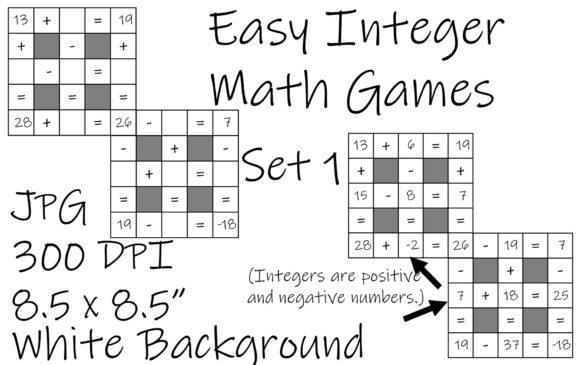
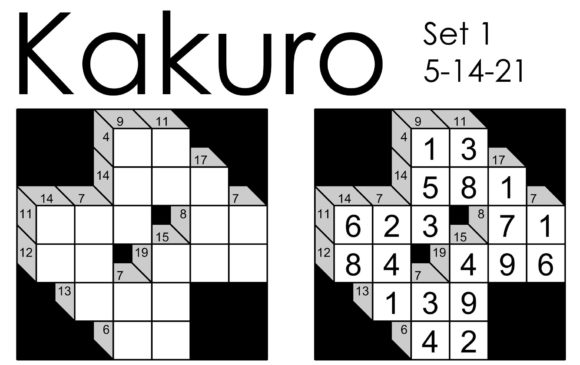
Beyond the screen, I have crafted an extensive array of both free and premium worksheets, meticulously designed to not only teach but also to ignite the curiosity and imagination of students. My approach is rooted in the belief that learning math should be an adventure—one filled with real-world applications, creative challenges, and even a touch of whimsy to make every number and equation resonate with real life.
Through my work, I aspire to continue infusing the world of mathematics with creativity, making it an accessible, enjoyable, and profoundly rewarding experience for learners of all ages and backgrounds. Join me on this extraordinary journey as we explore the universe of numbers and discover that in math, as in life, the possibilities are infinite.
Disclosure: This post may contain affiliate links, which means we may receive a commission if you click a link and purchase something that we have recommended. While clicking these links won't cost you any extra money, they will help us keep this site up and running. Thank you for your support!
My mission is to demystify mathematics and reveal its beauty and practicality to a diverse audience. I strive to provide an engaging platform that offers valuable resources, insightful content, and practical applications of math in various aspects of life. "It's no magic, it's math" is committed to fostering a community where learning math is not just educational but also fun and immensely rewarding.
Quick links
Created with © systeme.io